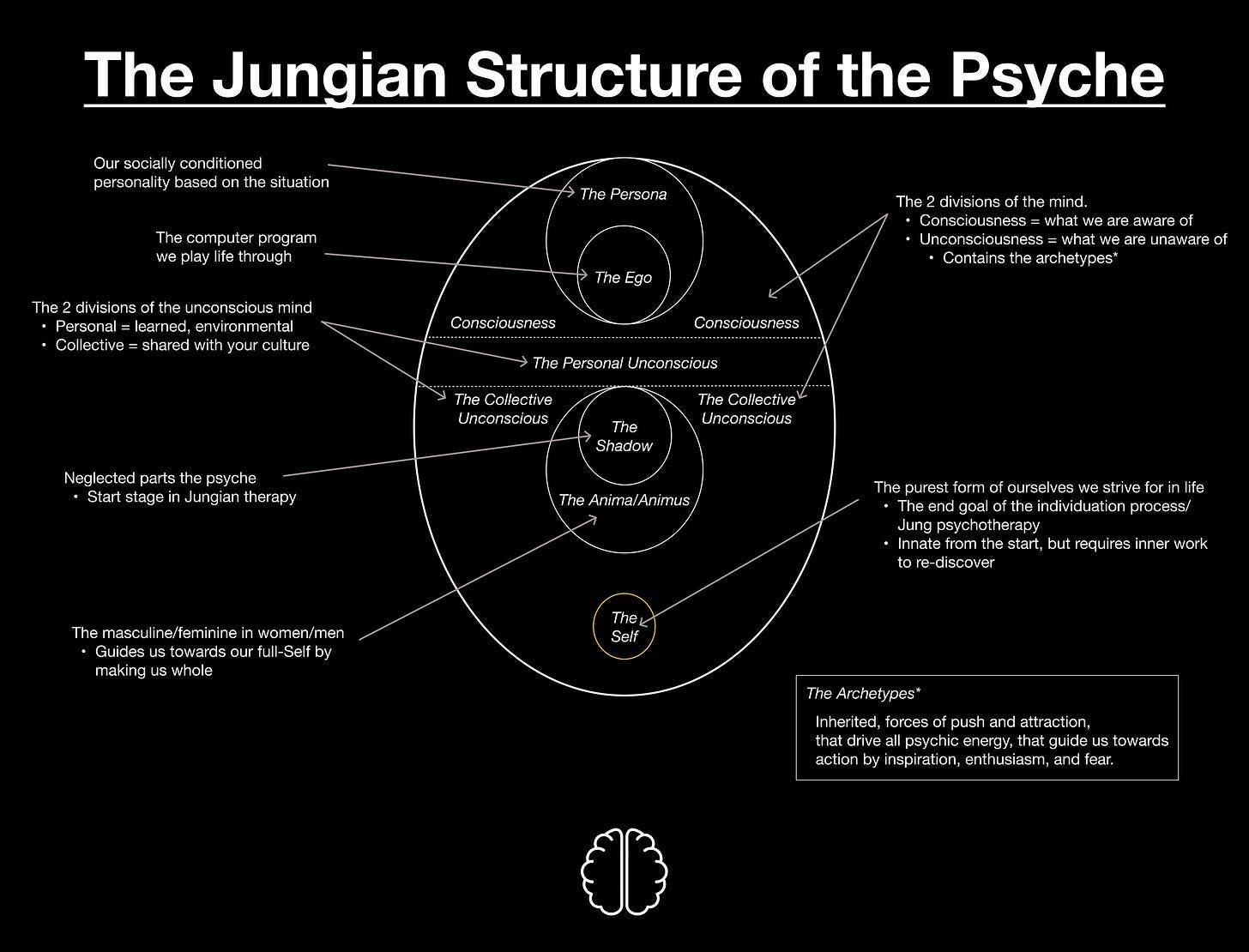
Another key concept in Jungian psychology is the Shadow.
The Shadow represents the hidden parts of ourselves — emotions, impulses, memories, and traits that we suppress because they feel unacceptable, painful, or frightening. Childhood trauma often pushes difficult emotions such as anger, fear, shame, or grief into this shadowed part of the psyche.
As adults, individuals may attempt to avoid confronting these emotions. Substances can become a way to keep the Shadow buried.
In Jung’s view, addiction may develop when a person repeatedly escapes inner conflict rather than integrating and understanding these hidden aspects of the self.
Healing, therefore, involves acknowledging and integrating the Shadow rather than continuing to suppress it.
The Wounded Inner Child
Although Jung did not use the modern phrase “inner child” as frequently as later psychologists, his work strongly influenced the idea that early experiences shape the emotional core of the personality.
Children depend on caregivers for safety, stability, and emotional validation. When these needs are not met — due to trauma, neglect, or instability — deep psychological wounds may form.
These wounds can manifest later as:
Substances can temporarily soothe these painful feelings, making addiction feel like a form of emotional self-medication.
However, because the underlying wound remains unaddressed, the relief is always temporary.
Addiction as a Substitute for Meaning
Jung famously suggested that addiction is often connected to a deeper spiritual hunger.
He once wrote in correspondence related to addiction treatment that the craving for substances may represent a misdirected search for wholeness or transcendence. In other words, individuals may unconsciously seek relief from emotional pain or a sense of meaning that they feel is missing.
Substances can briefly mimic feelings of connection, peace, or freedom. Yet these experiences fade quickly, leaving the underlying emptiness unresolved.
From a Jungian perspective, recovery requires addressing not only behaviour but also meaning, identity, and purpose.
Individuation: The Path to Healing
Jung believed that the ultimate goal of psychological development is individuation — the process of becoming a whole and integrated person.
Individuation involves confronting unconscious material, including trauma, fears, and suppressed emotions. Instead of avoiding these experiences, individuals gradually learn to understand and integrate them.
For people recovering from addiction, this process can include:
-
exploring childhood experiences
-
understanding emotional triggers
-
developing self-awareness
-
reconnecting with personal values
-
building meaningful relationships
Through this work, the person begins to replace temporary escape with genuine healing and self-understanding.
Why Understanding Trauma Matters in Recovery
Modern addiction treatment increasingly recognises the importance of trauma-informed care, a concept that strongly echoes Jung’s insights.
Many individuals struggling with addiction carry unresolved experiences from childhood that shaped how they respond to stress, relationships, and emotional pain.
When treatment addresses these deeper psychological roots — rather than focusing solely on stopping substance use — recovery becomes more sustainable and meaningful.
Therapy, peer support, and holistic healing approaches can help individuals process trauma, rebuild identity, and reconnect with a sense of purpose.
Addiction as a Signal, Not a Failure
From a Jungian perspective, addiction is not simply a moral failure or lack of discipline. It can be understood as a signal that deeper emotional wounds require attention.
Substances may temporarily silence inner pain, but they cannot resolve the experiences that created it.
Healing begins when individuals turn toward those hidden parts of themselves with compassion and curiosity. By understanding the connection between childhood trauma, the unconscious mind, and addictive behaviour, recovery becomes not just about stopping substances — but about reclaiming the self.
In Jung’s view, the journey through darkness is often what ultimately leads a person toward wholeness, meaning, and transformation.